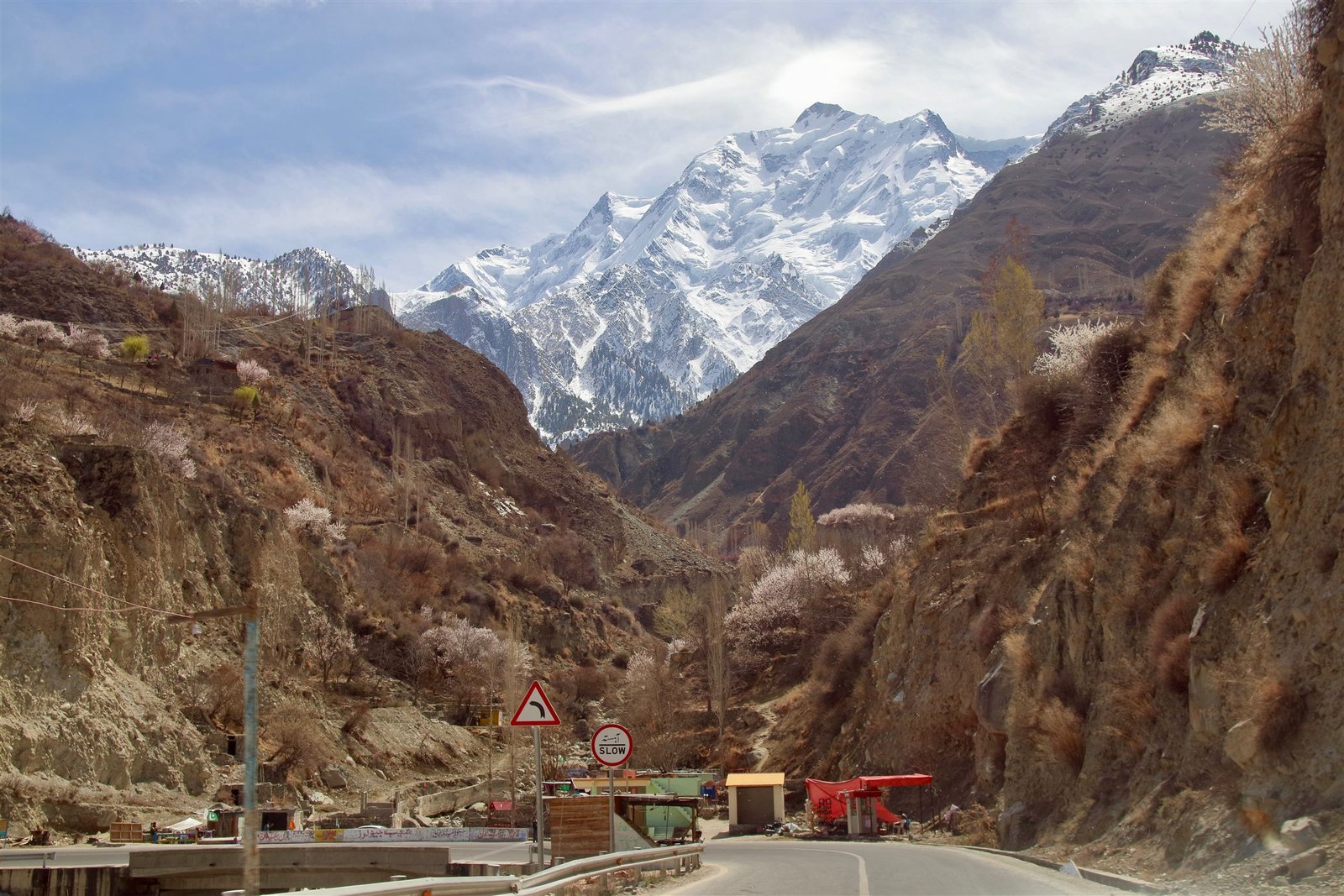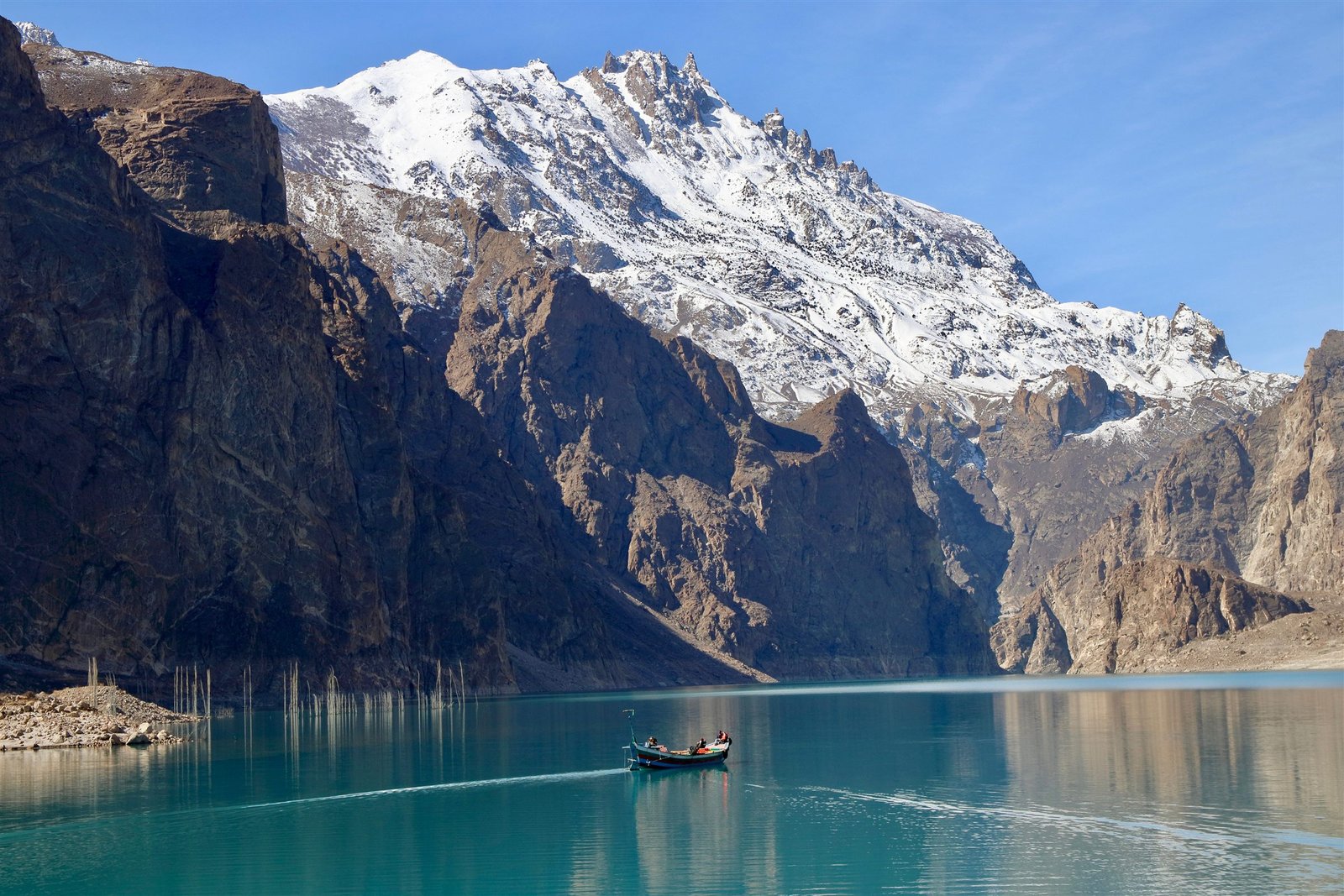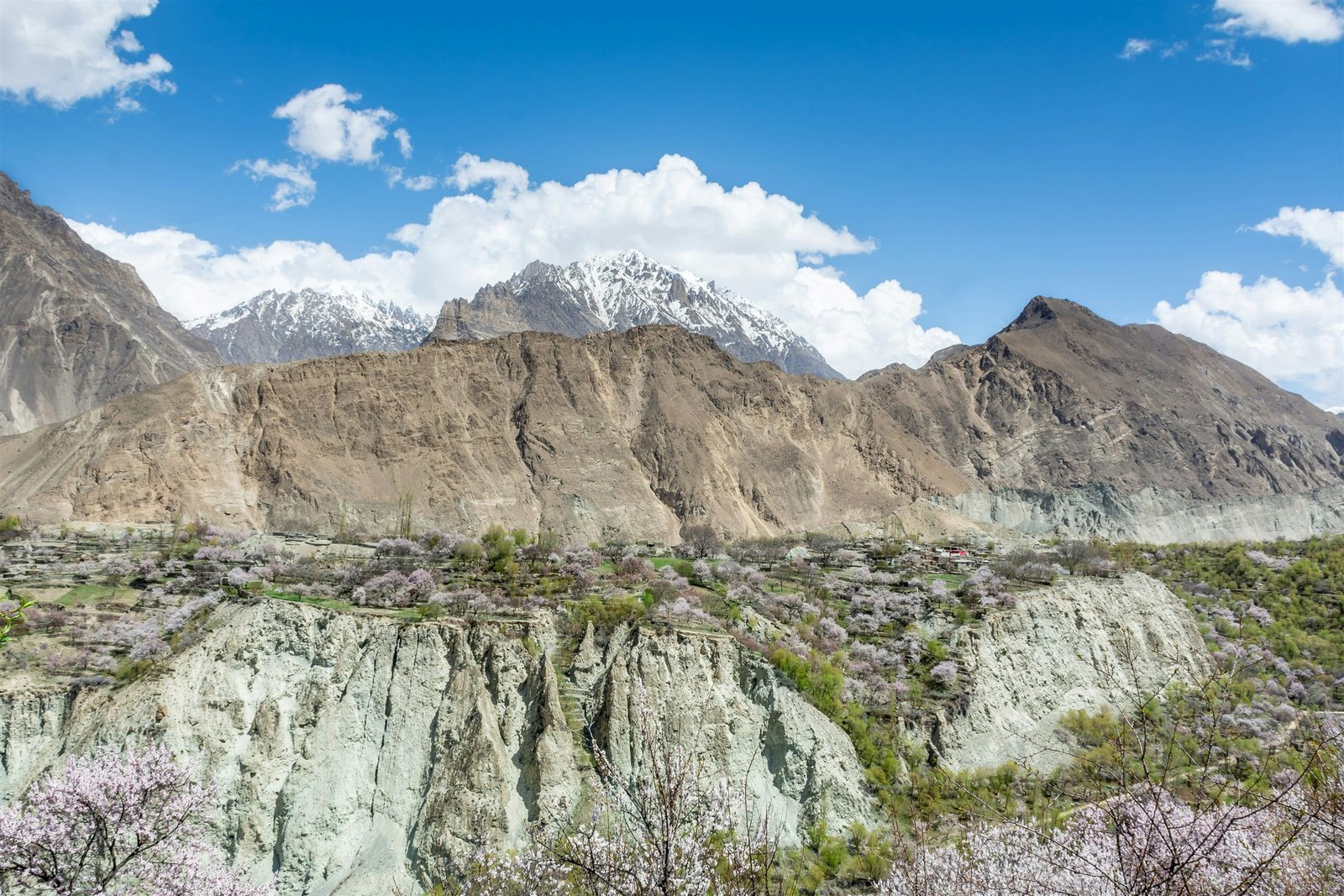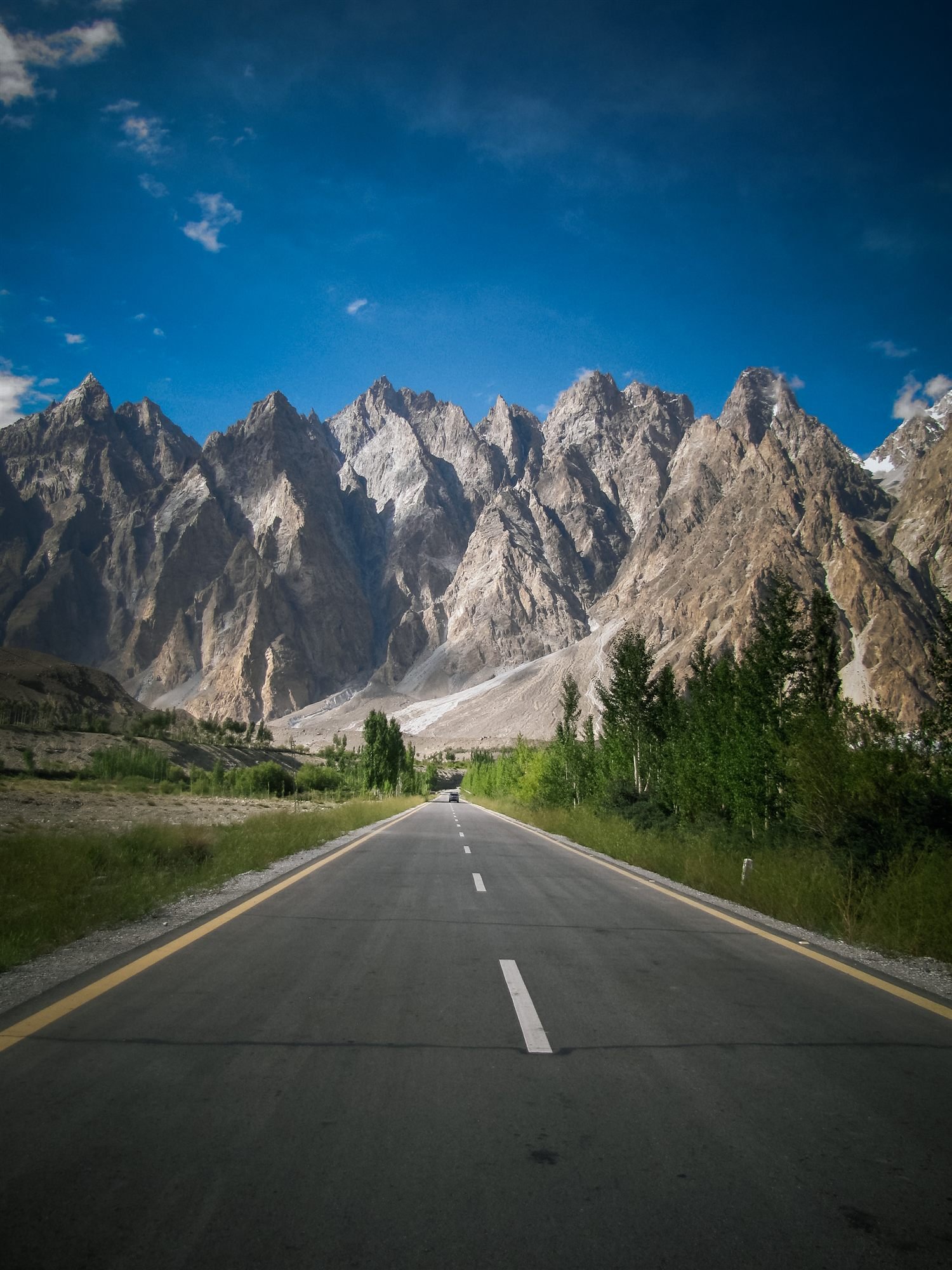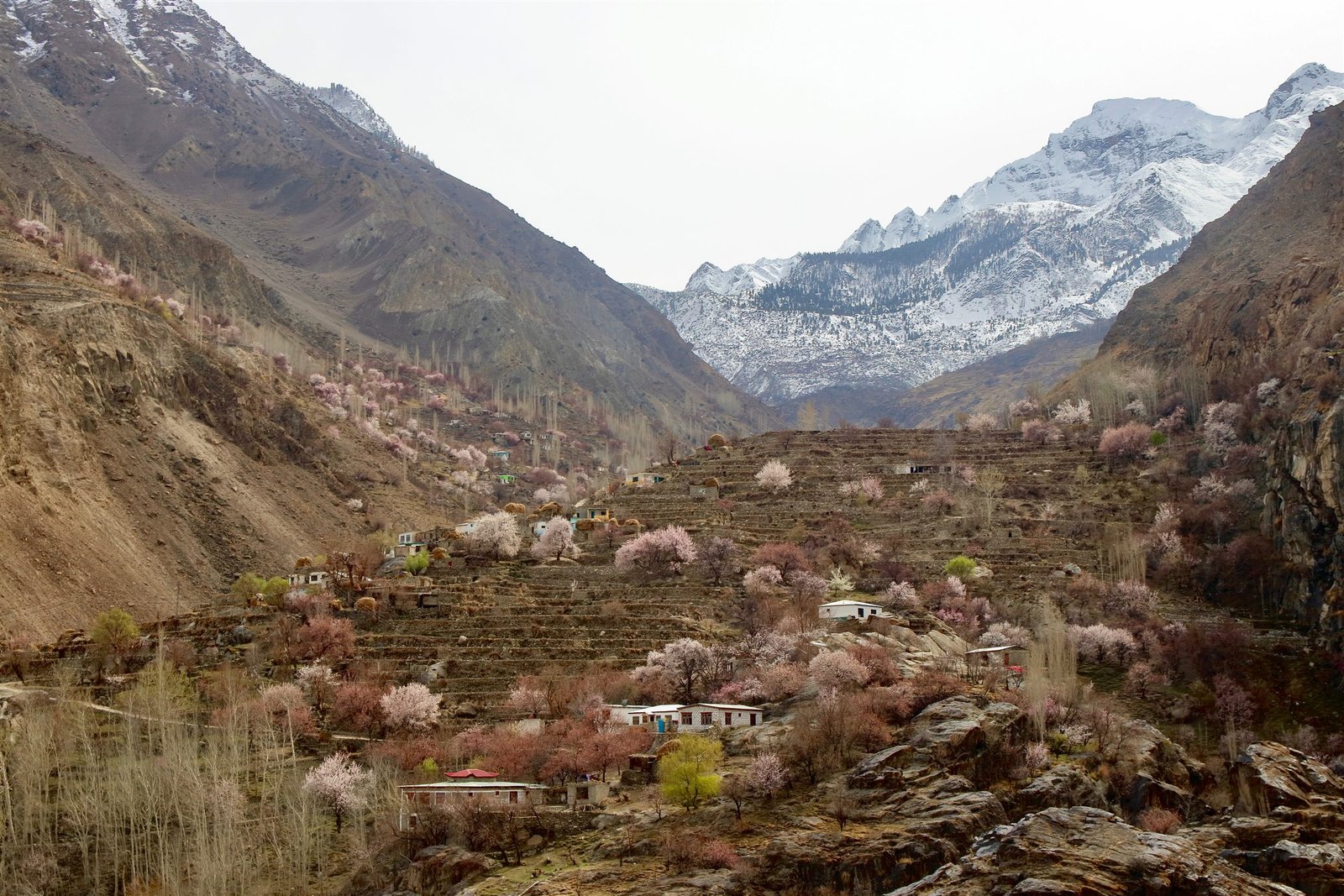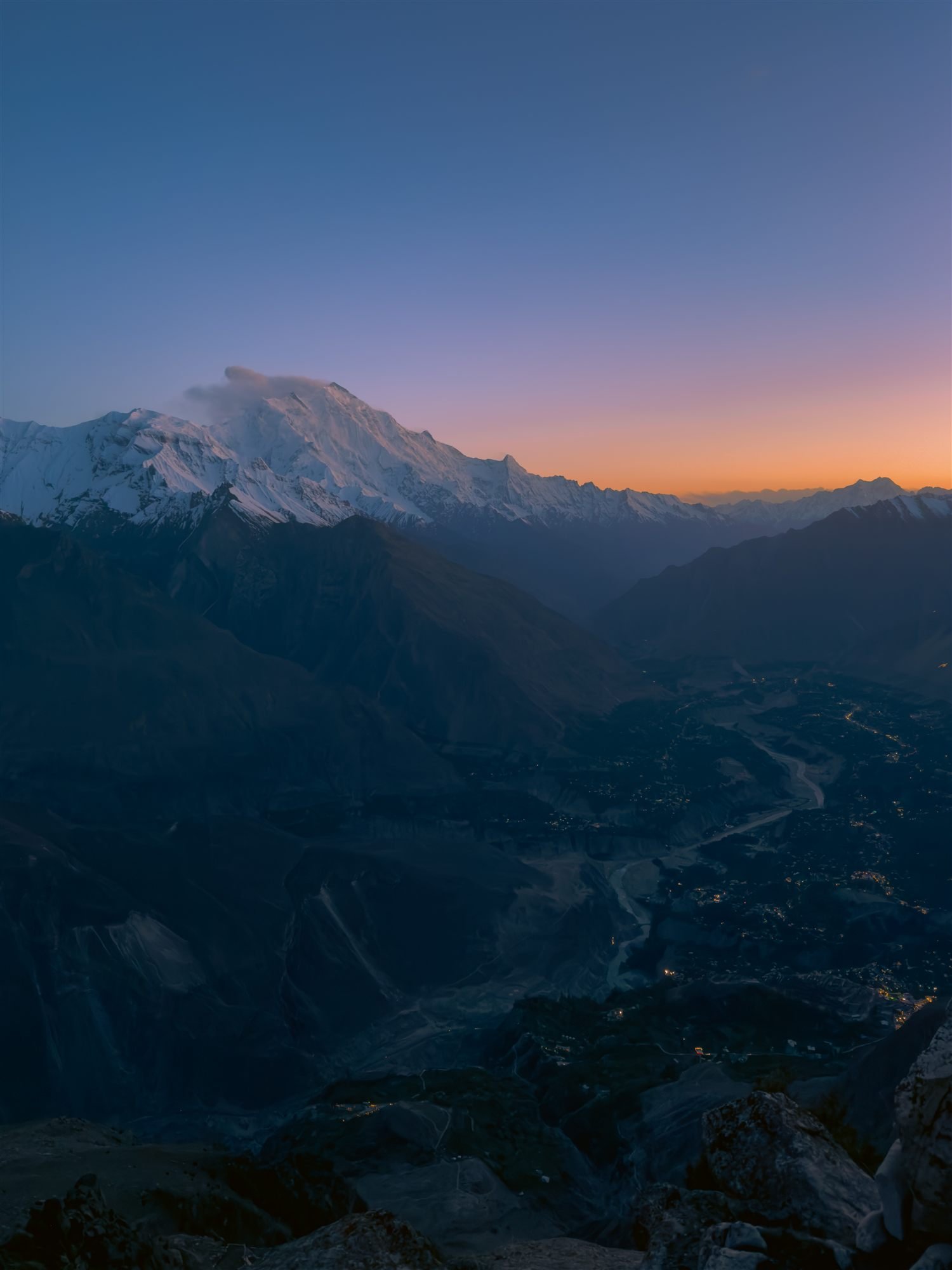
The Hunza valley has two short seasons that people plan trips around, and autumn is the better of them. Blossom in spring lasts about a fortnight and is beautiful in a soft, diffuse way. Autumn lasts three weeks, and it is the opposite: hard light, saturated colour, and air clear enough that Rakaposhi looks close enough to touch from thirty kilometres away.
The mechanism is simple. Poplar and apricot both turn yellow, the terraces are cut and bare, and the sun sits low enough by mid-October that the valley walls are lit for only part of the day. What you get is a landscape with the contrast turned up.
It is also the end of the working year. The apricots were dried in August, the potatoes come out of the ground in late September, and by the third week of October most households are preparing for a winter in which the road may be closed for a week at a time.
Practically: the last flights to Gilgit get unreliable from mid-October, the guesthouses start closing at the end of the month, and by the first week of November the light that made it worth coming has moved on.