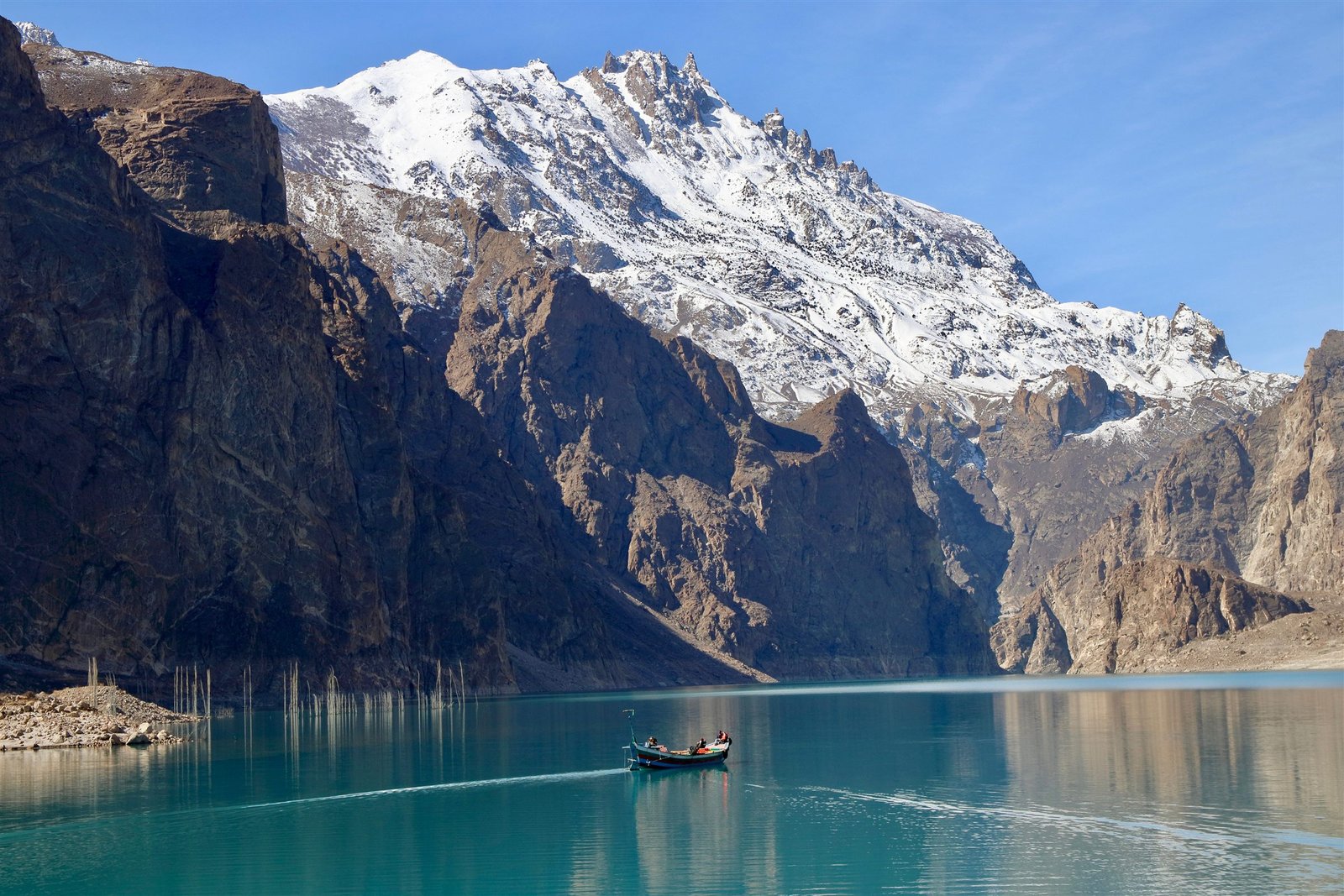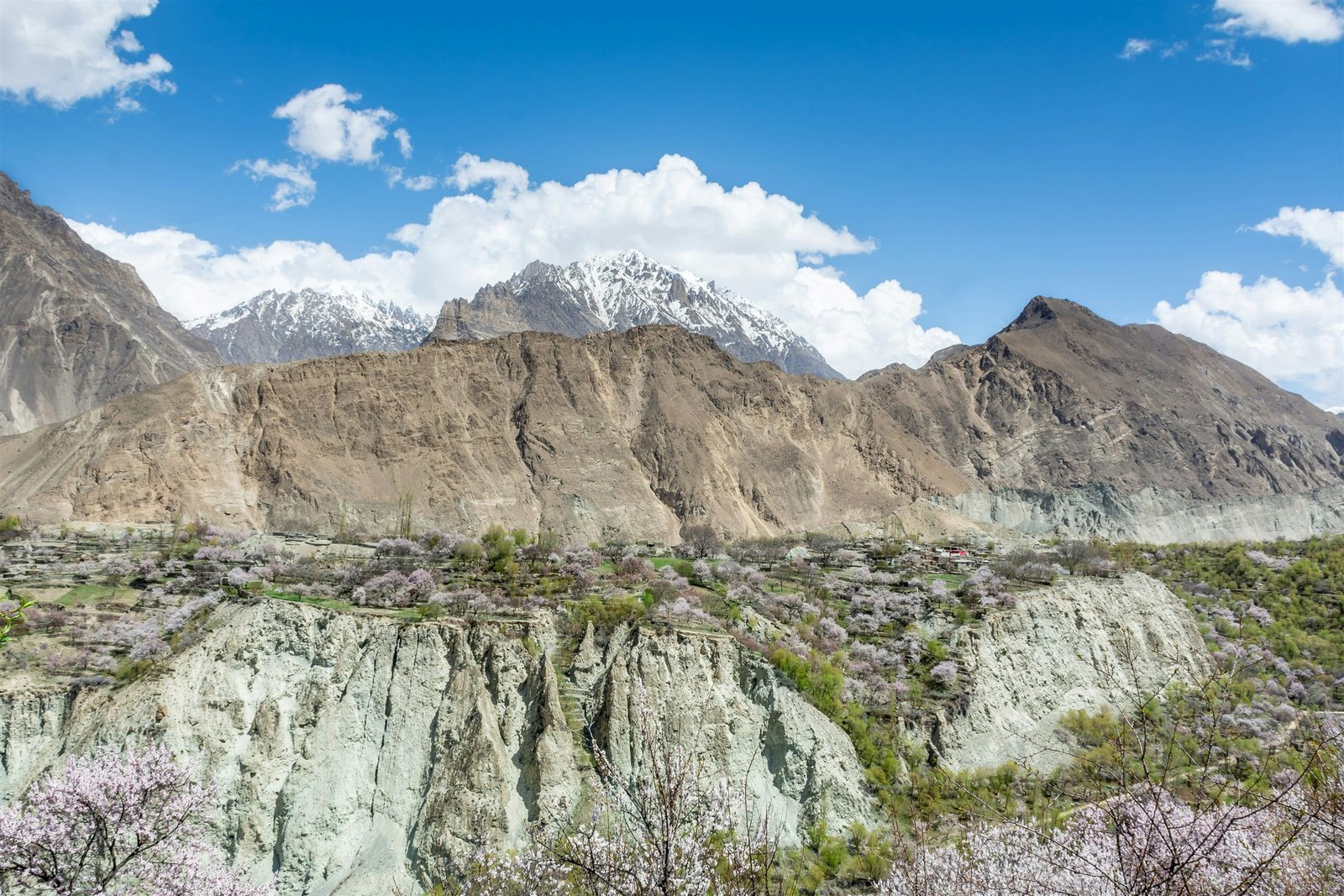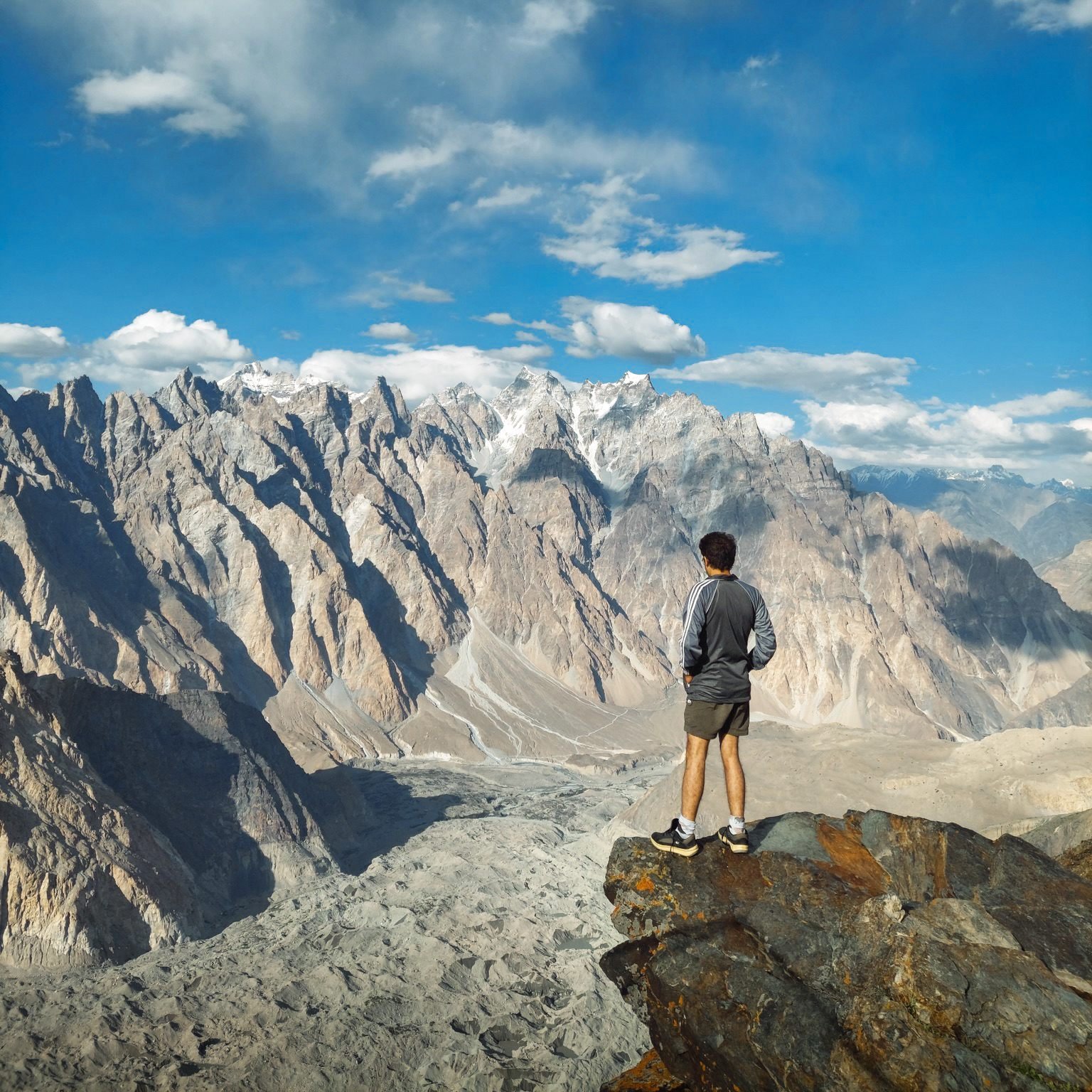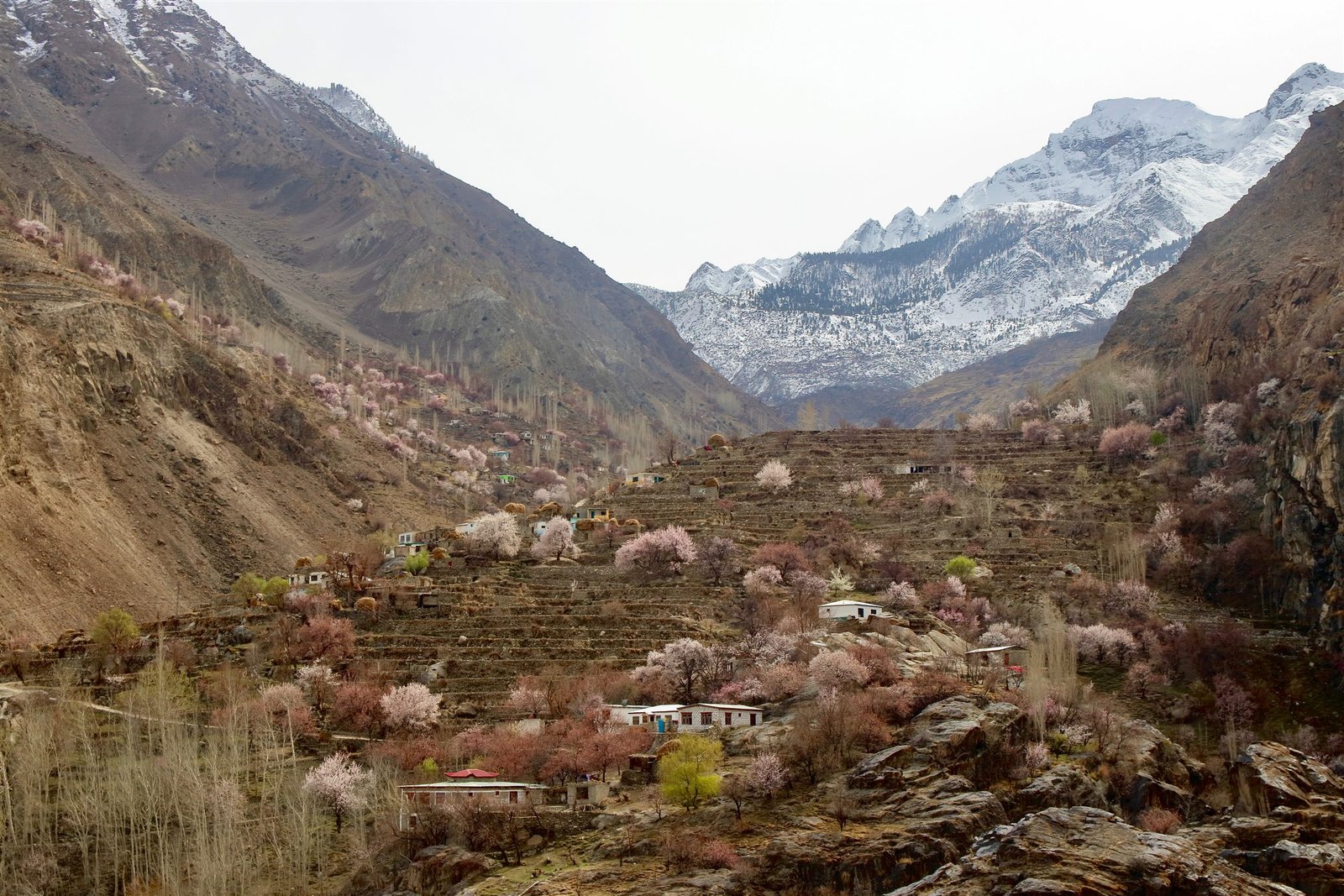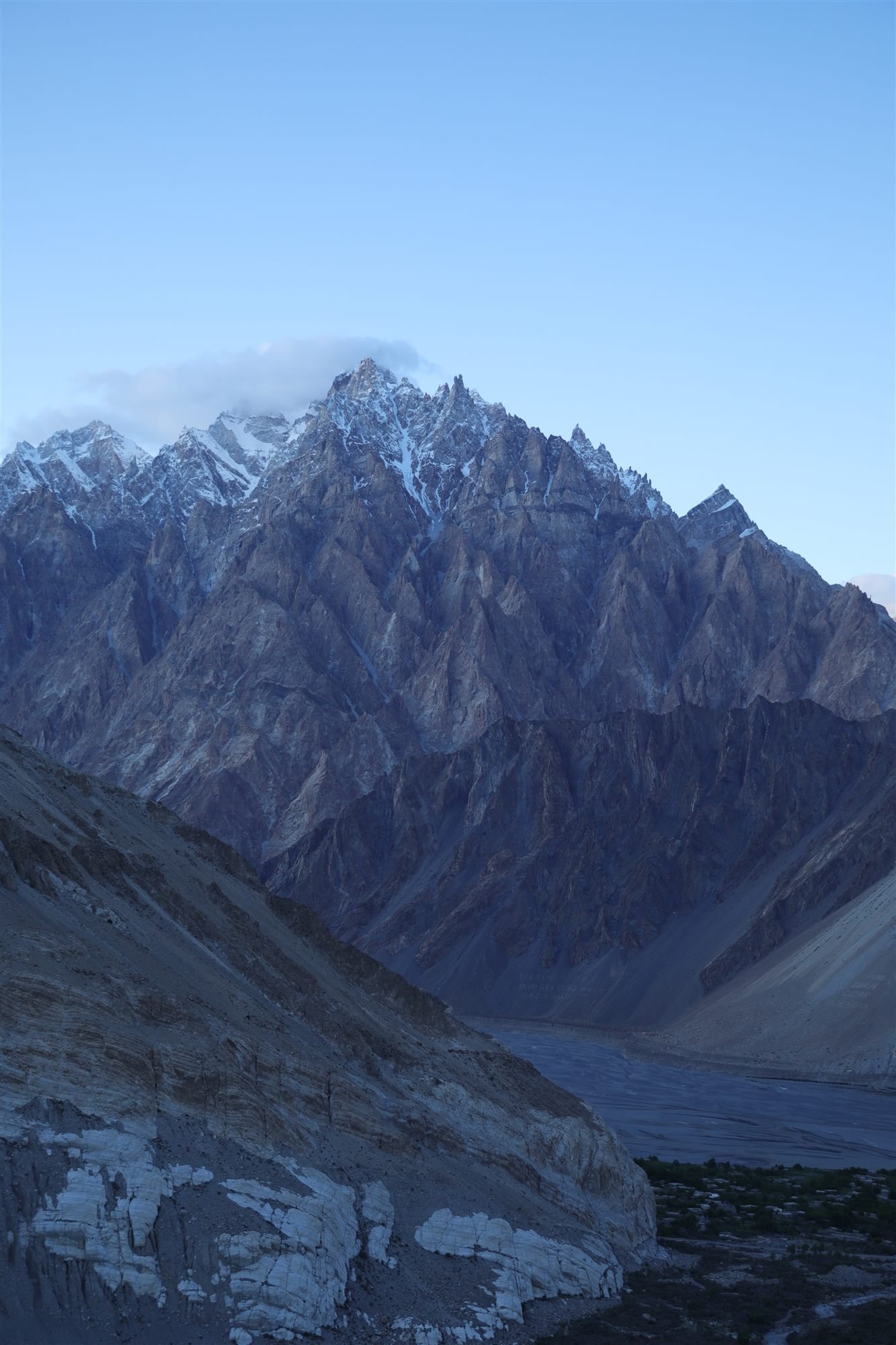
The Passu Cones appear on the currency, on the tail fins of aircraft, and on roughly one in three photographs anyone has ever taken in northern Pakistan. They are about three kilometres from the village of Passu, which has a population of somewhere under four hundred, one road through it, and no relationship with the image at all beyond living underneath it.
Karim Wali has run a guesthouse in Passu since 2011. In a good week in September he will have twelve rooms occupied. In January he has none, and the road to Gilgit is closed often enough that ordering flour becomes a planning exercise. "People come for two hours," he says. "They stop at the viewpoint, they take the photograph, they drive to Khunjerab. We are the place between two other places."
The two glaciers on either side of the village — Passu to the south, Batura to the north — have both retreated within living memory, and the irrigation channels that water the fields depend on them. In 2018 a channel above Passu failed in mid-July and the barley was lost. The village rebuilt it in eleven days with unpaid labour, which is how everything up here has always been done.
What has changed is who is doing it. Nearly every household has someone working in Karachi, Islamabad or the Gulf. The remittances build the guesthouses that the two-hour visitors do not stay in. Wali's own son is an engineer in Lahore and comes back for three weeks a year.
There is an argument, made mostly by people who do not live here, that tourism will hollow the valley out. Standing on the roof of Wali's guesthouse at seven in the morning, with the cones going from grey to gold and nobody else awake, the more immediate risk looks like the opposite: that the people driving past will keep driving, and the valley will empty for reasons that have nothing to do with them at all.