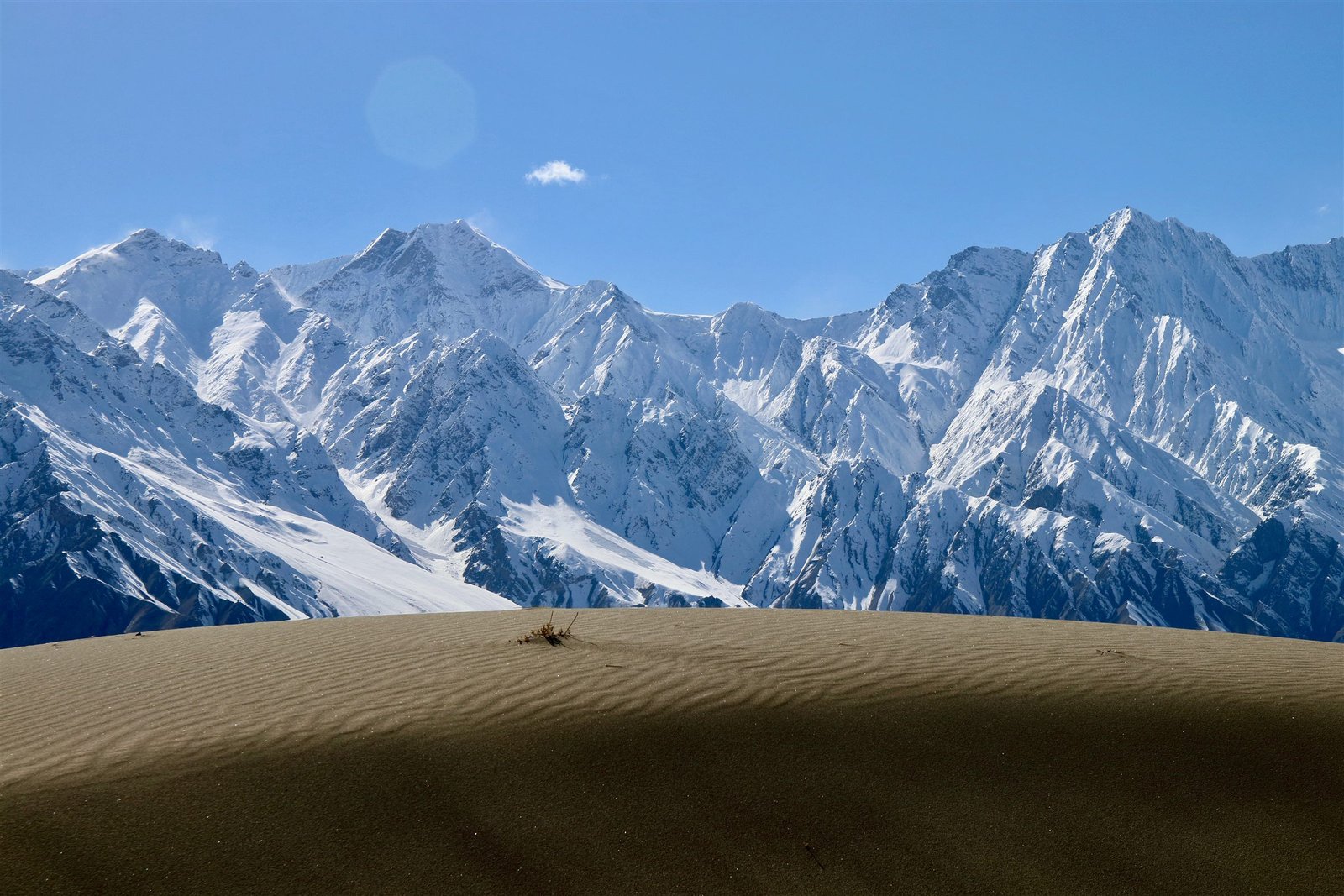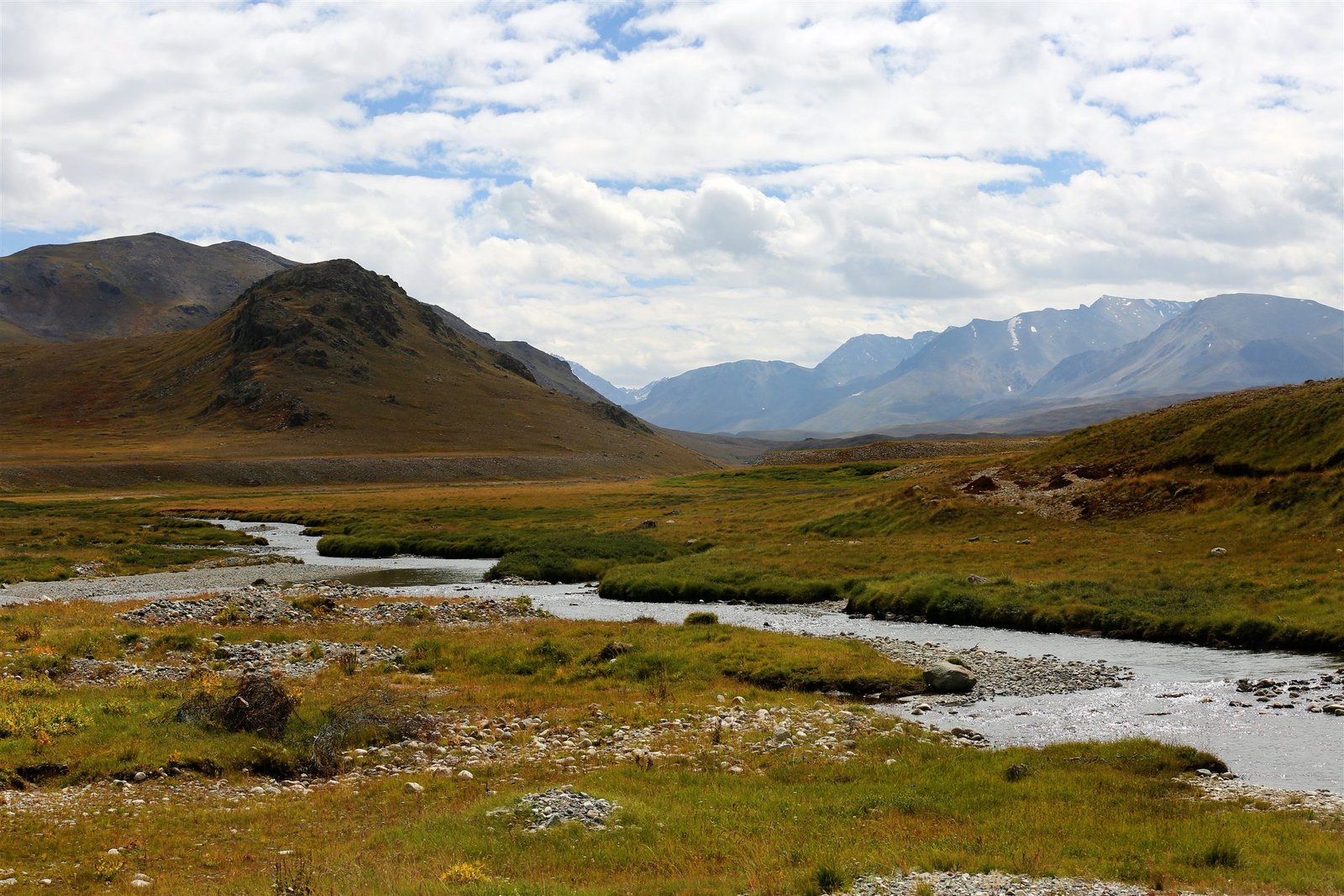
The first thing that goes wrong on Deosai is scale. There is nothing on the plateau of known size — no tree, no wall, no vehicle other than your own — and the brain uses known objects to judge distance. A ridge that looks like an hour's walk is four. A river that looks close enough to step over is forty metres wide.
The second thing is the flatness. Deosai sits at around 4,000 metres and is, by the standards of the Karakoram, almost perfectly level. It was a glacial basin: the ice sat here long enough to grind the underlying rock into something approaching a plain, and when it retreated it left behind a surface that drains badly and grows nothing tall.
Everything alive on the plateau is therefore short. In the ten weeks it is not under snow, the whole surface flowers at once — a shallow layer of colour perhaps fifteen centimetres deep, running to the base of every surrounding ridge without interruption.
The brown bears are the third thing. There are perhaps seventy Himalayan brown bears on Deosai, down from an estimated nineteen in the early 1990s and back up through thirty years of protection. They are the reason the park exists. You will almost certainly not see one, and the possibility rearranges how you look at the ground for three days.
None of this is dramatic in the way a mountain is dramatic. Deosai is the opposite of a summit: an enormous quantity of nothing, at an altitude where nothing should be flat, for a very short season each year.